
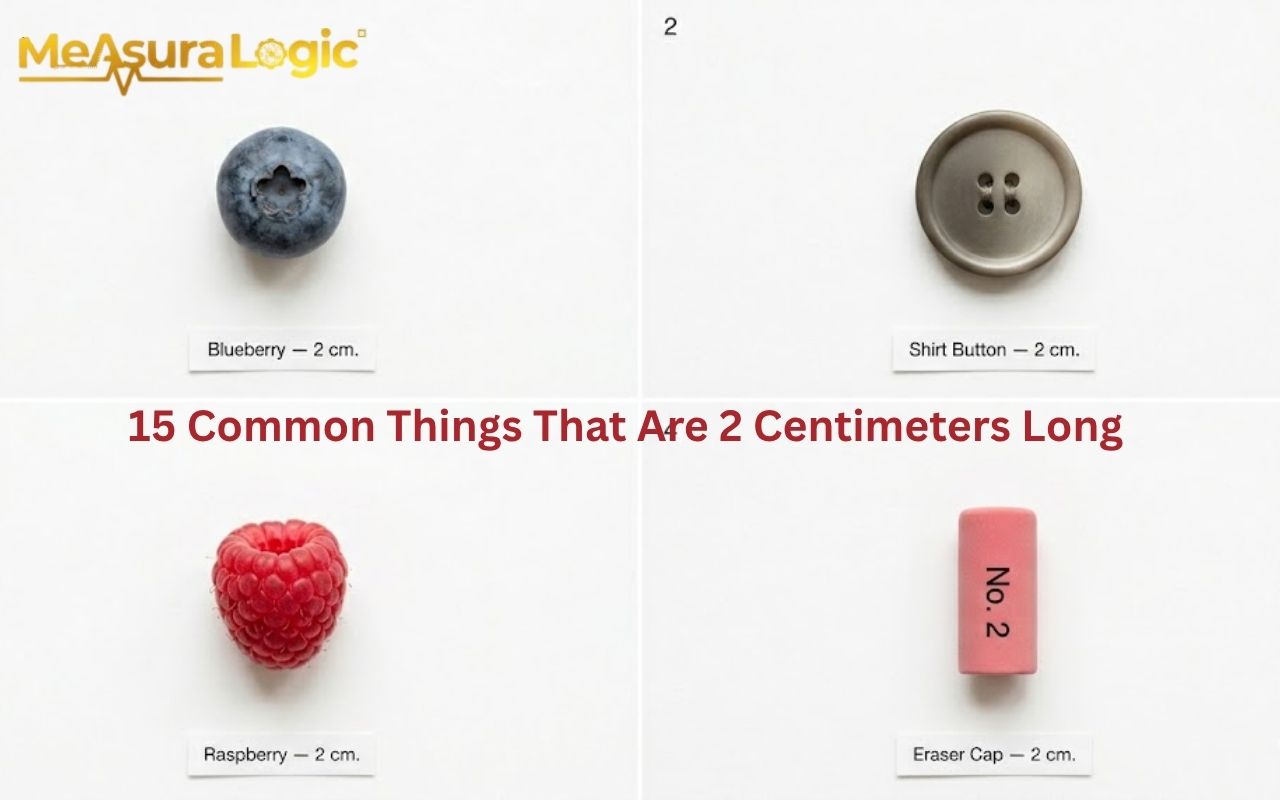
You are trying to picture 2 centimeters and your brain draws a blank. That happens to everyone. Two centimeters is small enough to feel abstract, yet it shows up in medicine, cooking, crafts, and DIY more than you’d expect.
You probably own at least five things right now that measure exactly 2 cm. This guide covers 15 of them plus a quick conversion table and body-based estimation tricks so you never need a ruler again.
Quick Conversion: 2 Centimeters
Before diving into comparisons, here is how 2 cm translates across the metric system and beyond.
| Unit | Equivalent |
|---|---|
| Millimeters | 20 mm |
| Inches | 0.787 in (roughly ¾ of an inch) |
| Feet | 0.0656 ft |
| Meters | 0.02 m |
| Pixels (96 DPI screen) | ~75.6 px |
Quick mental anchor: Think of 2 cm as just under one inch. It is closer to ¾ of an inch than a full one — keep that in mind when estimating.
Read about, Florida Dimensions: How Big Is the Sunshine State, Really?
What Does 2 Centimeters Actually Look Like?
Place your thumb and index finger about the width of your thumbnail apart. That gap? That is roughly 2 centimeters. It is the kind of length that looks almost trivial on a ruler, barely a blip, yet it defines the size of a blueberry, the shaft of a thumbtack, and the diameter of a coin’s inner ring.
On a standard ruler, 2 cm falls right between the 1 cm and 3 cm marks. Two of those small metric divisions, side by side. Simple as that.
Things That Are 2 Centimeters Long
1. A Blueberry
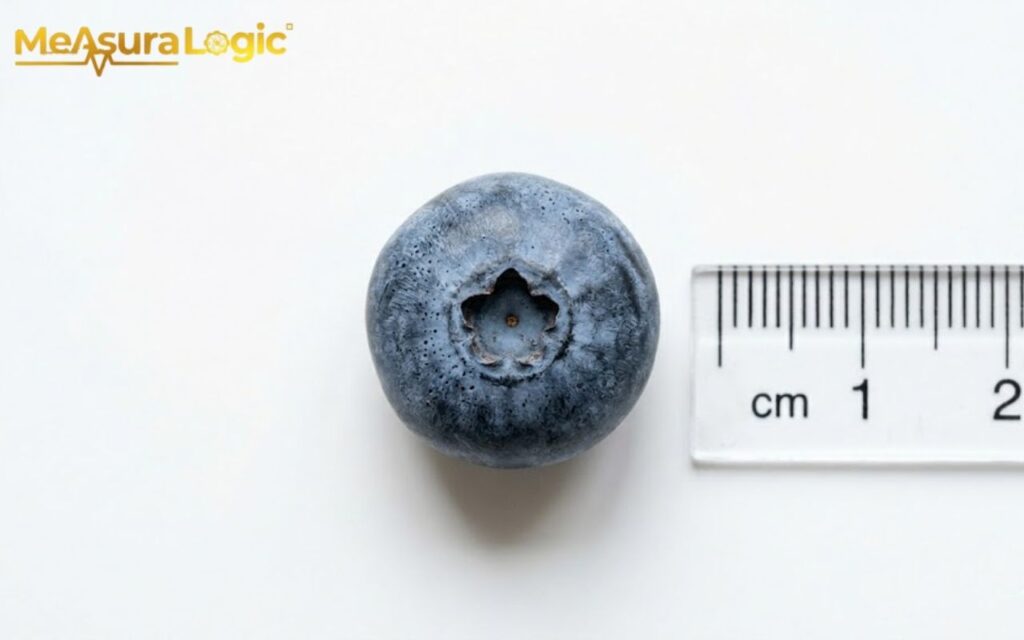
Pick up a medium-sized blueberry and you are holding almost exactly 2 cm of diameter. Not a small, shriveled one — a plump, ripe berry fresh off the bush. Blueberries are commercially graded by size, and the standard “large” grade sits right at 18–22 mm, which lands squarely in 2 centimeter territory.
2. A Large Shirt Button
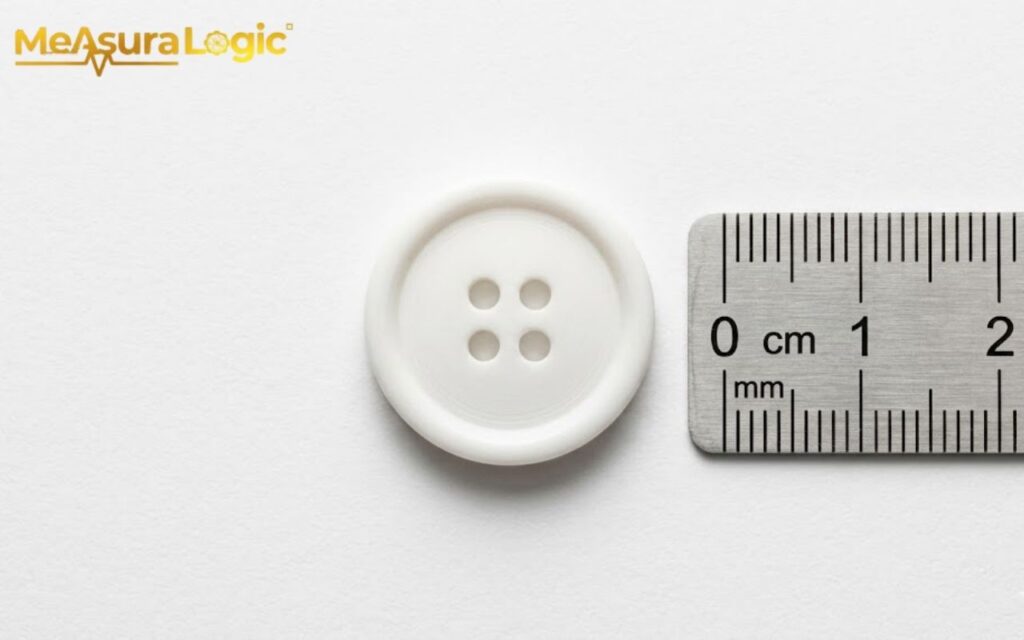
That shirt button on your dress shirt or jacket? The large ones, typically found on blazers, coats, and formal shirts, measure almost exactly 2 cm in diameter. Button diameter is standardized in the fashion industry using “ligne” measurements, and a 32-ligne clothing fastener converts to roughly 20.3 mm.
3. Your Index Fingernail Width
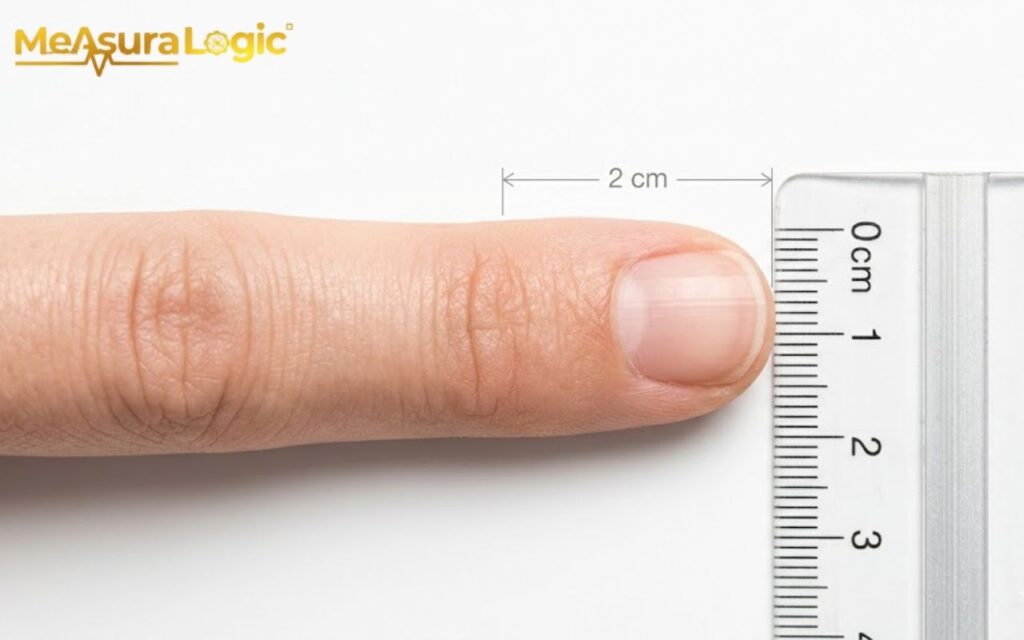
Here is a body measurement you carry everywhere. The average adult index fingernail spans between 1.5 and 2 cm in width. For most people, it is a near perfect natural ruler.
Your pinky finger nail, by contrast, runs closer to 1 cm — useful if you need a 1 cm reference instead. But for 2 centimeters, the index finger wins. Press your nail against any flat surface and you have got a human hand-powered measuring tool that requires zero equipment.
Learn about, 15 Surprising Things That Weigh 100 Kilograms
4. A Raspberry
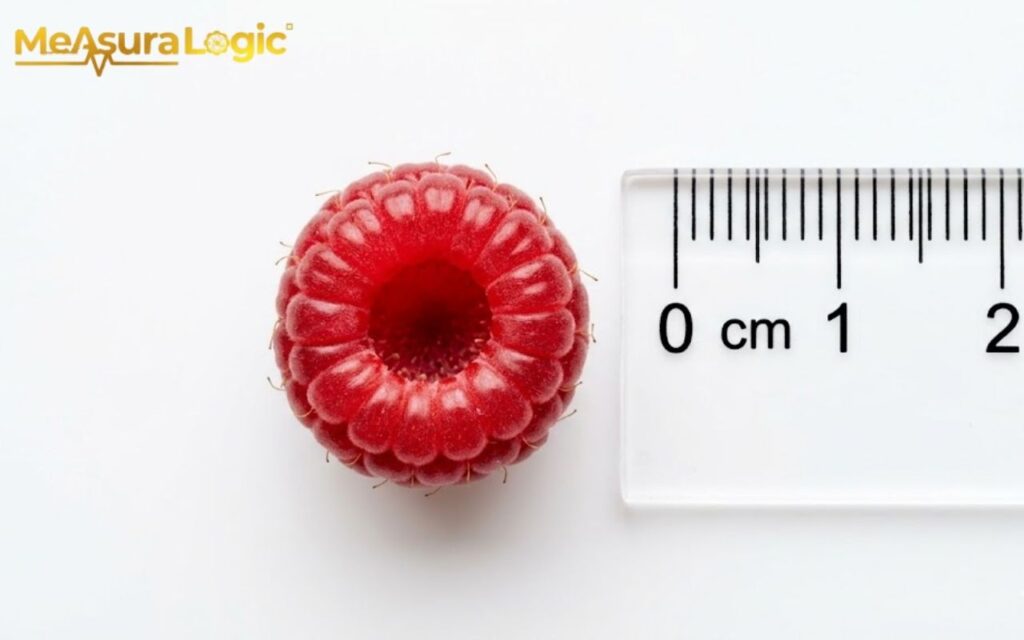
Raspberries run even more uniform than blueberries. A standard fresh raspberry measures approximately 2 cm in diameter and their hollow center makes sizing feel intuitive. You can almost see the measurement just by looking at one.
This is exactly why medical professionals reach for berry analogies. When describing the size of a lymph node, tumor, or skin lesion, a doctor saying “about the size of a raspberry” communicates exact dimension more effectively than quoting raw numbers.
5. The Eraser Cap on a No. 2 Pencil
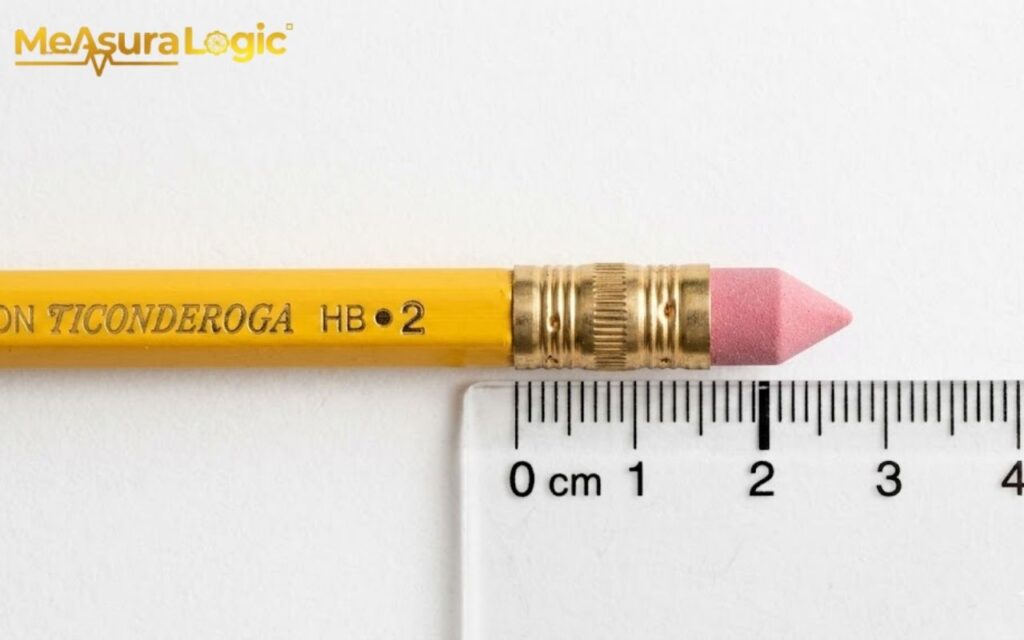
Everyone pictures the width of a No. 2 pencil but the length of the eraser on top is a different story. That little pink rubber cap measures approximately 2 cm long. It is one of those everyday things hiding in plain sight.
This reference works particularly well for kids. Pull a pencil out of a backpack and you have got a standard measurement reference that is impossible to forget. The graphite pencil itself is standardized in diameter at 7 mm but that eraser length is your 2 cm anchor.
6. A US Quarter (Stacked)
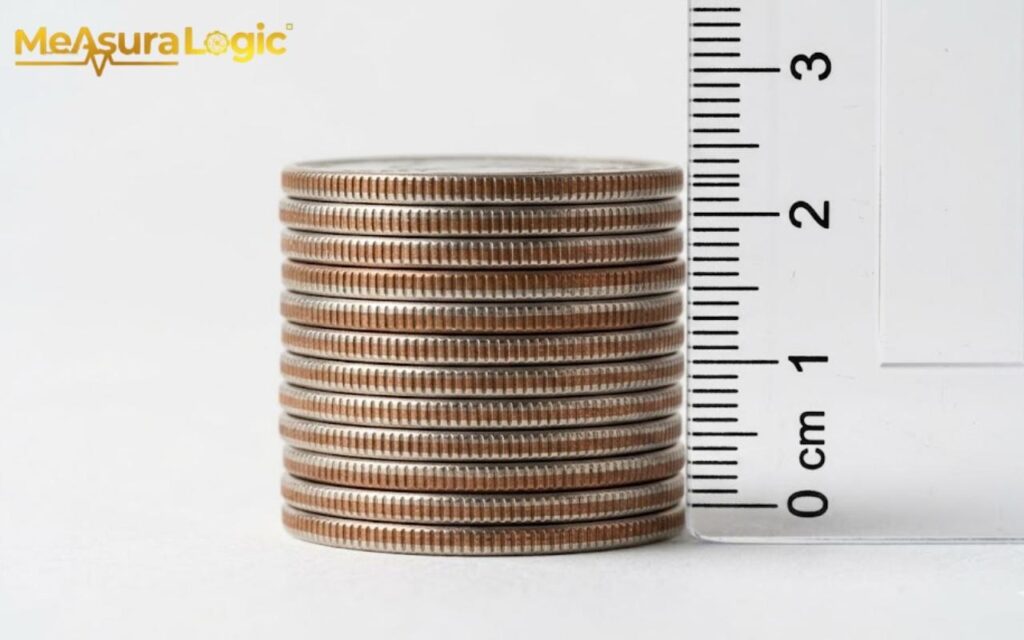
A single US quarter is 24.26 mm in diameter, slightly larger than 2 cm. But here is where it gets practical: the quarter dollar is 1.75 mm thick. Stack 11 or 12 of them and you have built yourself a tower that is almost exactly 2 centimeters tall.
Alternatively, the raised inner ring of a quarter — that flat platform between the face and the reeded edge — runs close to 2 cm across. American currency is one of the most consistent size references available because U.S. pocket change is minted to exact tolerances. Every quarter is identical. That makes 25 cent coins a reliable, repeatable measuring tool.
Explore About, 10 Ounces Explained: 20 Everyday Things That Weigh 10 Ounces
7. A CD or DVD (Inner Hub)
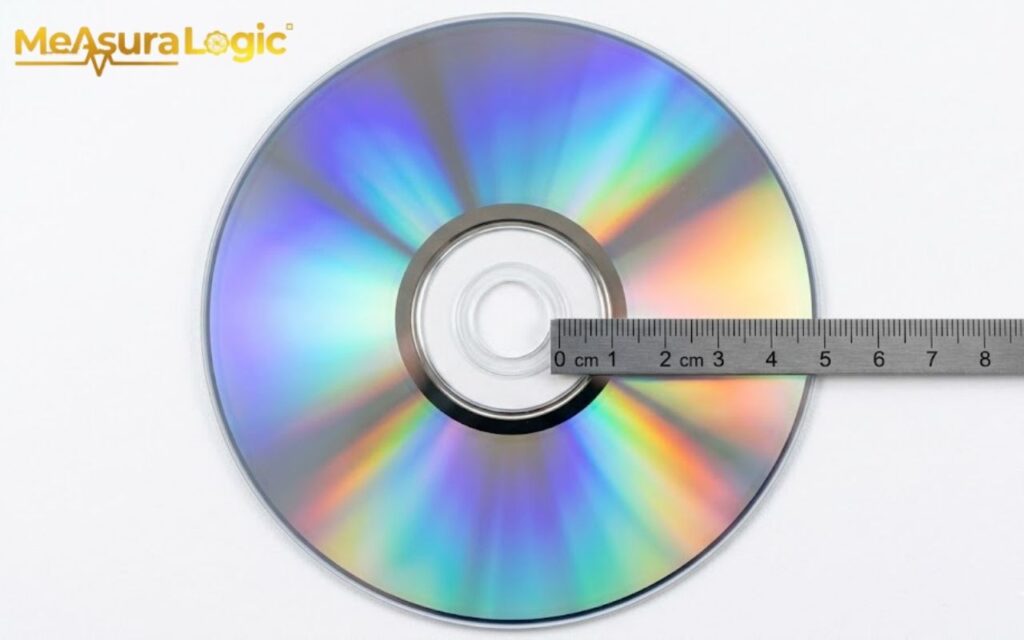
The physical disc might be 12 cm across, but look at the center hub — that clear or frosted plastic circle surrounding the hole. Its diameter measures approximately 2 cm. Most people overlook this entirely, yet it’s right there every time you handle a disc.
8. A Thumbtack Pin Shaft
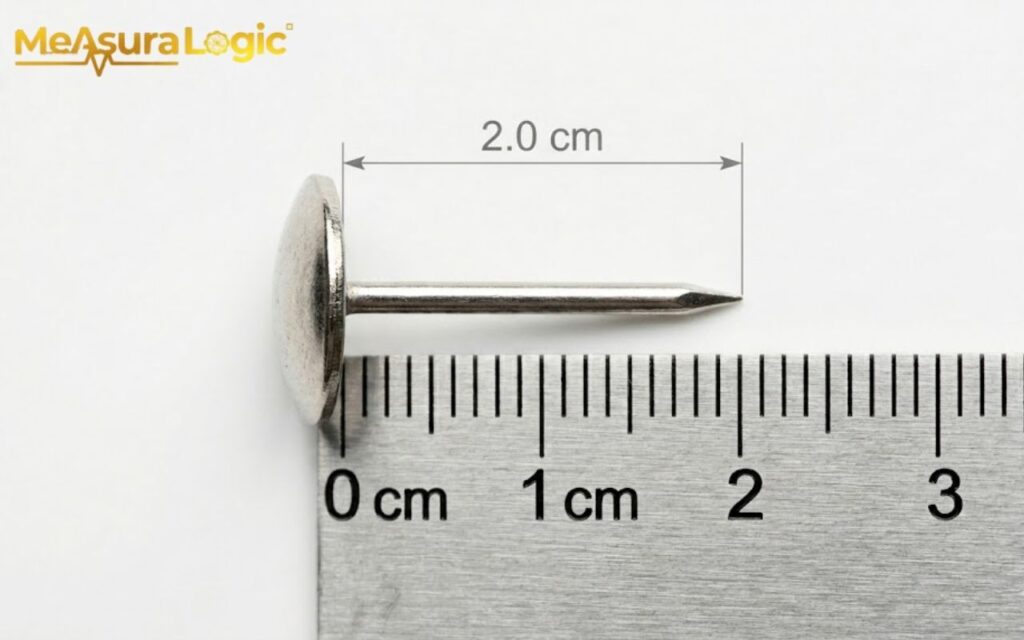
Pull a thumbtack from your bulletin board and flip it over. The metal pin shaft, the part that punctures the wall, measures approximately 2 cm in length. This makes thumbtack pins one of the most precise and overlooked size comparison tools in any home office. Push pins and corkboard pins vary slightly in head size, but the pin itself stays remarkably consistent across brands.
9. Garden Peas
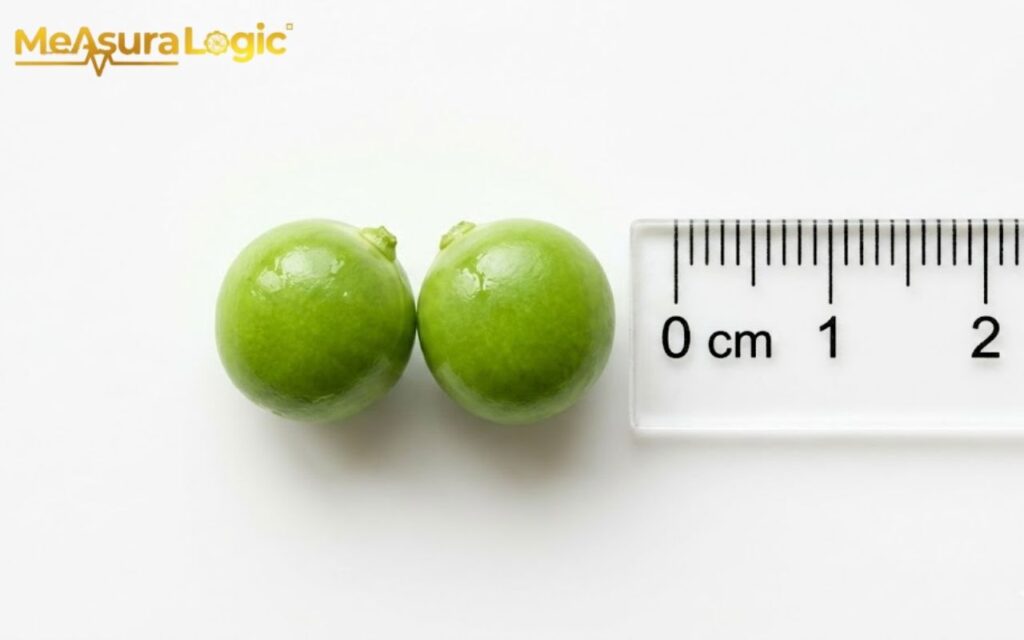
Two plump garden peas sitting side by side span almost exactly 2 centimeters. A single pea measures between 8 and 10 mm in diameter. Line two up and you land right on your length equivalent.
Find about, 20 Everyday Things That Weigh 10 Kilograms (2026)
10. Half a Golf Ball
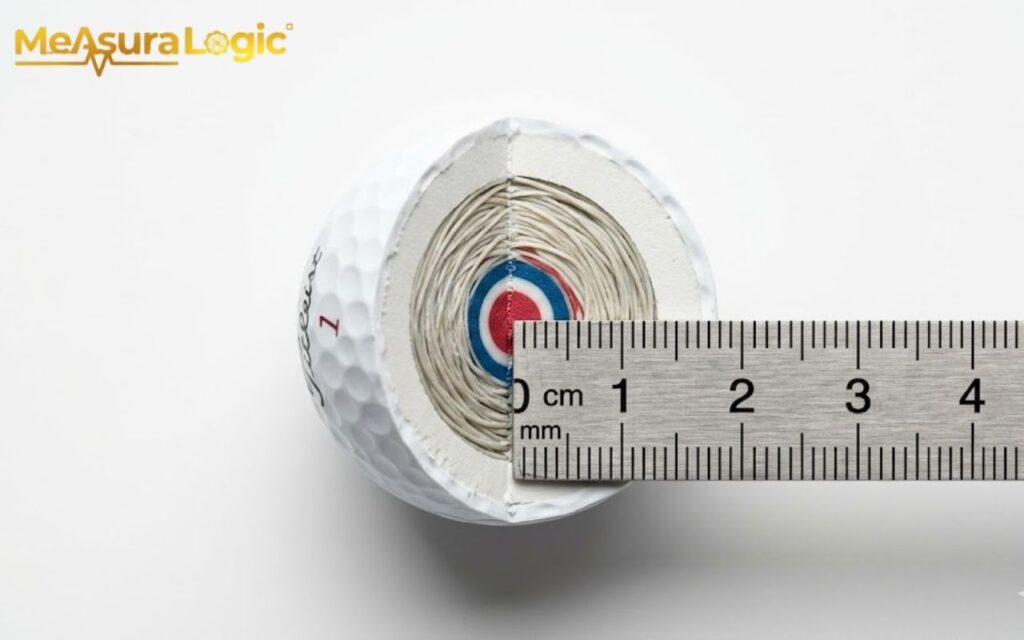
A regulation golf ball must be at least 42.67 mm (4.267 cm) in diameter under USGA rules. Exactly half of that is 21.3 mm — just over 2 centimeters. Imagine slicing a dimpled ball clean through the middle. That flat face of the half is your 2 cm visual.
Sports equipment like golf balls is precision-manufactured to tight tolerances, so this is not a rough estimate, it is reliable. The aerodynamic design of a golf ball also means its dimensions are one of the most-cited measurement references in sports.
11. A Standard Staple
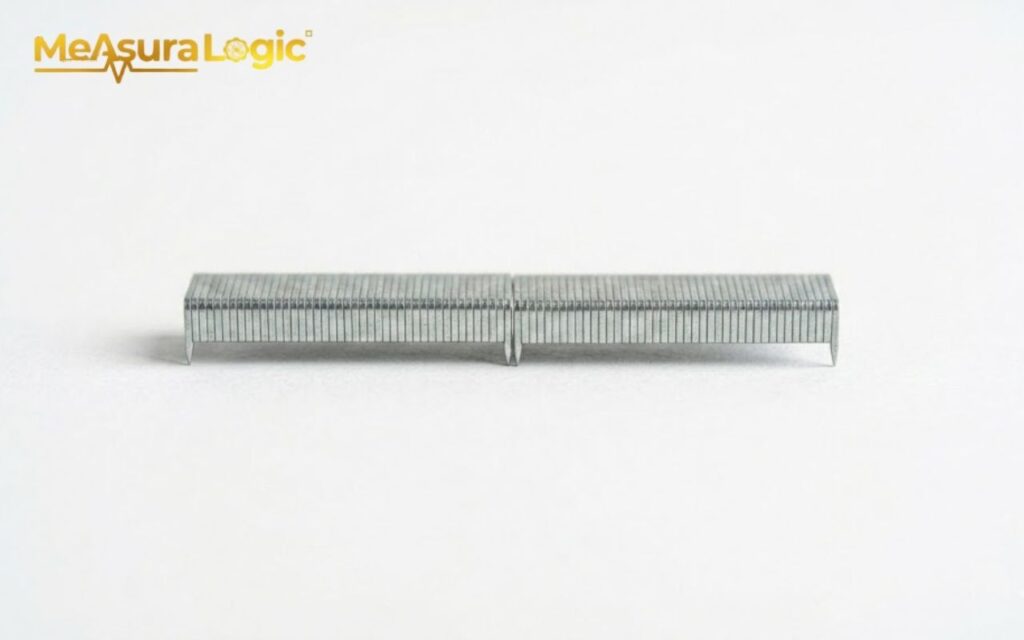
Open your stapler and look at the strip of standard staples inside. The width of a No. 10 staple — the most common office supply size in the US — is approximately 10.5 mm. That means two staples placed end-to-end reach almost exactly 2 centimeters.
Metal wire staples are manufactured to exacting dimensions. Every brand of standard staples uses the same 6mm staple leg depth and similar widths, making them one of the most consistent stationery items you can find.
12. Skittles Candy
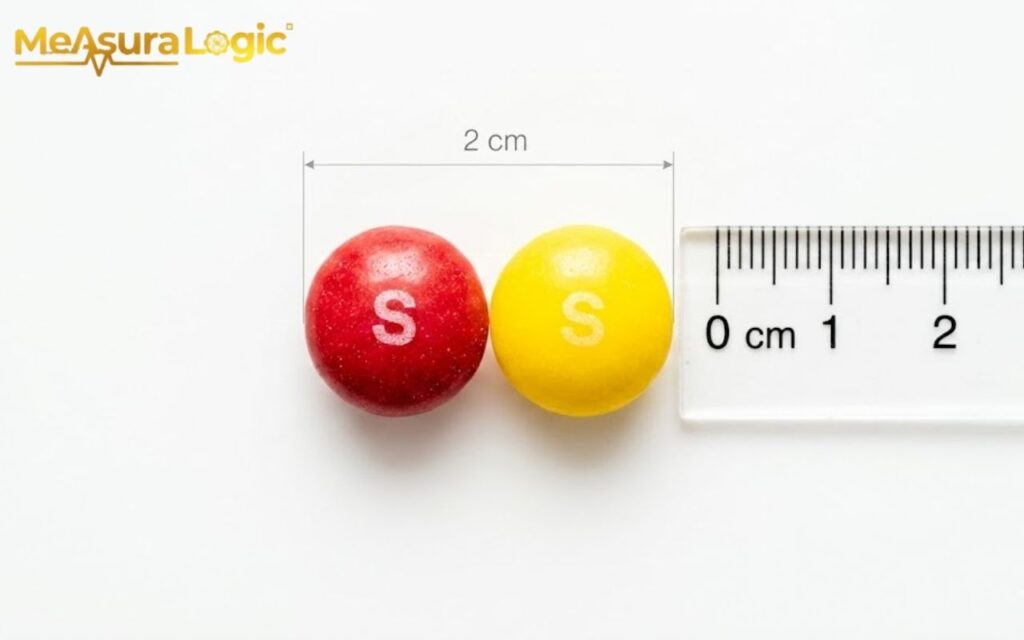
Each Skittle measures about 14–15 mm in diameter. Two sitting side by side stretch to approximately 2 centimeters, making them a surprisingly accurate and memorable reference — especially with kids.
Beyond being fun, this works because Skittles are machine-made to consistent dimensions. There is almost no variation between pieces in the same bag. That uniformity is exactly what makes candy like this useful for size visualization when you need something people can immediately picture and relate to.
Learn About, Dead Sea Dimension, history, salinity, Science and facts explained
13. A No. 2 Pencil — Three Side by Side
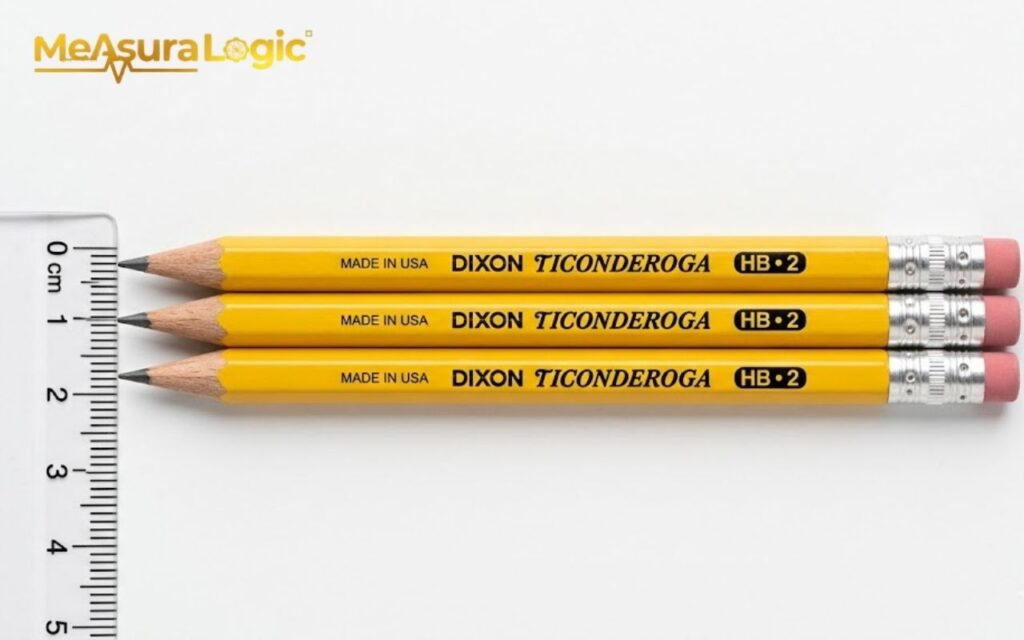
A hexagonal pencil in the standard No. 2 size measures approximately 7 mm across its widest flat-to-flat dimension. Set three standard pencils side by side and you are looking at 21 mm — right at 2 centimeters, give or take a fraction.
This triple-pencil trick works well in classroom settings. Teachers explaining measurements to students can use the drawing tools right on their desks as live examples.
14. An Aspirin Tablet
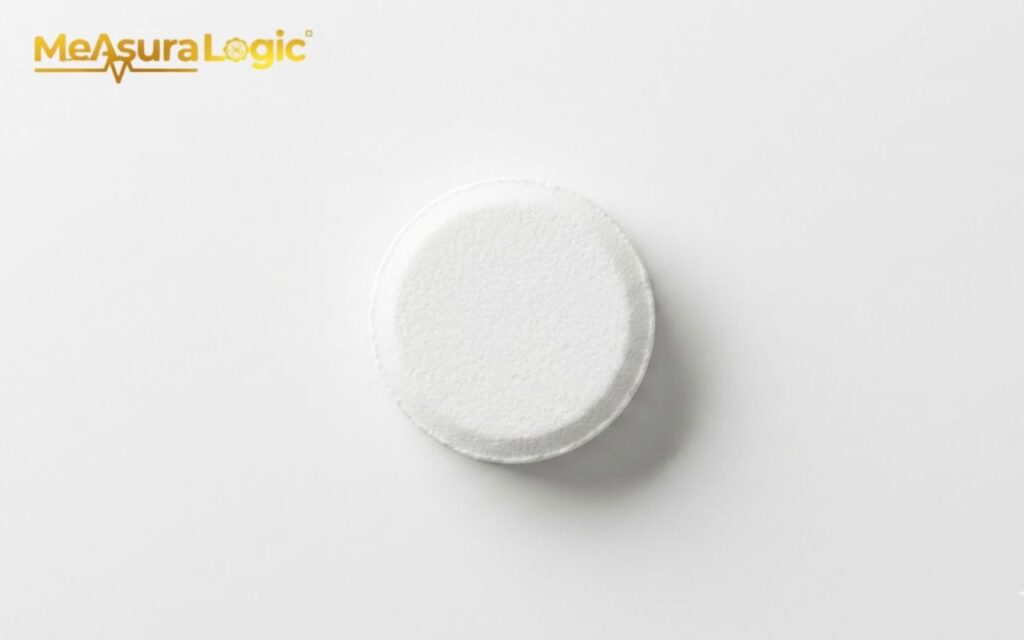
Standard 325 mg aspirin tablets — the original, uncoated kind — measure approximately 19–20 mm in diameter. That puts them at almost exactly 2 cm across. Check your medicine cabinet, there is likely a bottle in there right now.
15. A 100-Page Notepad (Thickness)
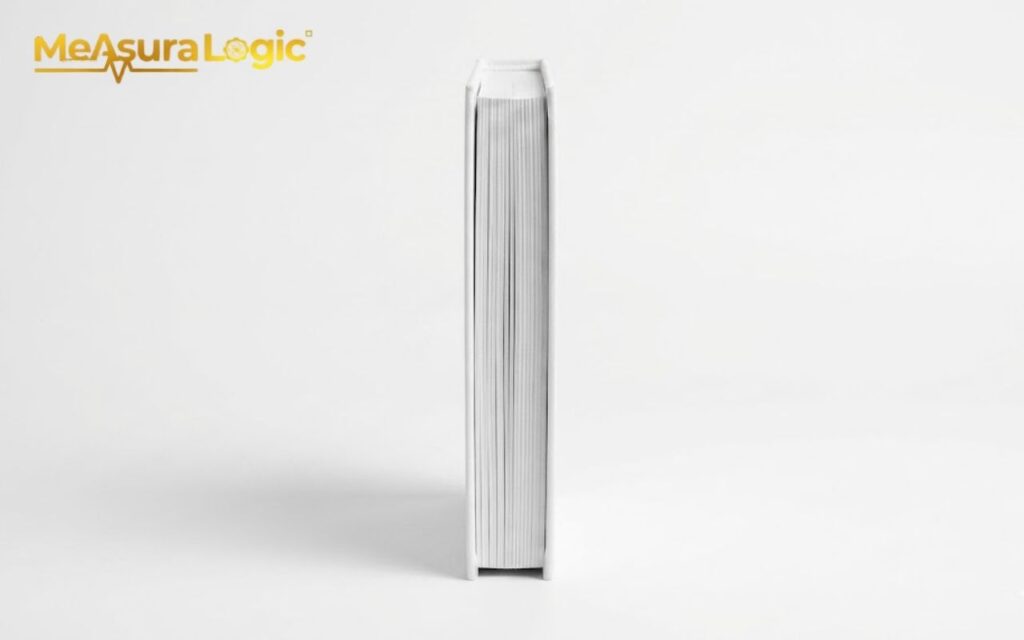
Stack 100 standard sheets of 75 gsm office paper and you get a thickness of roughly 10 mm. A typical 100 page notepad which contains 100 sheets (200 pages) comes out to approximately 2 cm thick. Pick one up and squeeze the spine between your fingers, that is your metric length made physical.
Where Does 2 Centimeters Come Up in Real Life?
This is not just a trivia exercise. Knowing what 2 centimeters looks like has practical value across a surprising range of situations.
- Medical contexts: Doctors routinely describe skin lesions, cysts, lymph nodes, and masses using centimeter measurements.
- Cooking and baking: Recipes often call for cutting ingredients into uniform pieces. “Dice into 2 cm cubes” is a common instruction for vegetables.
- DIY and crafts: Whether you are spacing screws, cutting fabric, or laying tile, 2 centimeters shows up constantly. Jewelry makers deal with 2 cm bead spacings, gem measurements, and finding widths on a daily basis.
Learn about 19 Everyday Things That Weigh 50 Pounds
Quick Quiz: How Well Do You Know 2 Centimeters?
Test yourself. Answers are at the bottom, no peeking!
Q1. How many millimeters are in 2 centimeters?
- A) 2 mm
- B) 10 mm
- C) 20 mm
- D) 200 mm
Q2. Which of these is the most uniform and consistent real-world reference for 2 cm?
- A) A cherry
- B) A standard thumbtack pin shaft
- C) A pencil eraser (side width)
- D) A paperclip
Q3. A regulation golf ball is 42.67 mm in diameter. What fraction of that equals approximately 2 cm?
- A) One quarter
- B) One third
- C) One half
- D) Two thirds
Q4. In typography, approximately how many points equal 2 centimeters in print?
- A) 12 pt
- B) 24 pt
- C) 57 pt
- D) 96 pt
Q5.Which profession most commonly uses berry-sized references like “2 cm” to describe measurements to patients?
- A) Chefs
- B) Architects
- C) Medical professionals
- D) Jewelers
Answers
- C
- B
- C
- C
- C
conclusion
Pick one reference from this list and commit it to memory — your fingernail, a Skittle, a raspberry. Having a single reliable anchor makes 2 centimeters instantly familiar wherever you encounter it. Bookmark this page for the next time someone throws that measurement at you and you need to picture it fast.
FAQs about 2 centimeters
Is 2 centimeters the same in all countries that use the metric system?
Yes. The metric system is governed by the International System of Units (SI), so a centimeter is identical whether you’re in Germany, Japan, or Brazil. Two centimeters is universally 20 millimeters, 0.02 meters, and 0.787 inches, no regional exceptions.
Can 2 centimeters be significant in photography and optics?
Absolutely. In macro photography, 2 cm is often the minimum focus distance — the closest a lens can physically get to a subject while still capturing a sharp image. Lens element spacing and aperture blade diameters also frequently fall in the 1.5–2.5 cm range, making this a surprisingly relevant exact measurement in optics.
How does 2 centimeters relate to typography and font sizing?
At standard screen resolution (96 DPI), 2 cm equals roughly 75.6 pixels. In print design, that translates to approximately 57 points of vertical space, larger than body text but common for display headlines and magazine subheadings. Useful to know if you are switching between metric length and point sizes in a print layout.
Read about, Things That Weigh 1 Gram: 18 Everyday items You Never Noticed

Joss River is an experienced blogger at Measura Logic, focusing on all aspects of measurements. He uses his profound knowledge to demystify complex topics, covering everything from standard units and precision to the history and logic of various measuring systems. Joss helps readers achieve a deeper understanding and appreciation for accurate data and reliable measurements.